
Evaluating Value on Free-Tier Versus Paid OnlyFans Pages
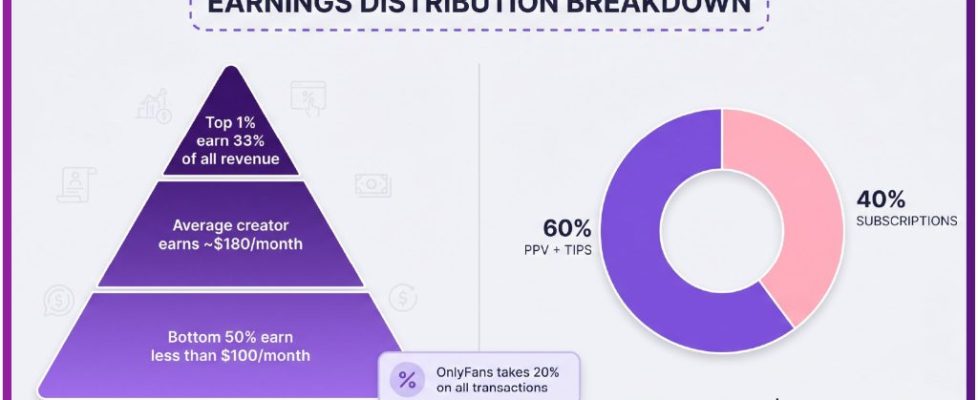

OnlyFans structures access through two distinct pricing models that reshape how subscribers consume creator content. Understanding the operational differences between free-tier and paid subscription pages helps you allocate spending efficiently and avoid unexpected costs. BestOnlyFans provides ranking frameworks that assess value across both models, giving subscribers tools to compare options before committing financially.
What actually happens when you subscribe to nothing versus something?
Free pages set subscription price to $0. They function as sampling environments. Creators post teaser material there. They monetize through pay-per-view (PPV) messages, paid chat, and tips. Paid pages require base subscriptions starting at $4.99 monthly.
Broader feed access opens immediately. Additional paid options remain for premium content. Your usage patterns determine which tier delivers better value.

5 ways free-tier access hits walls.
Creators use free pages to build follower counts, demonstrate posting consistency, and convert subscribers to paid status through selective restrictions. These limitations include:
- Partial feed visibility where only teaser galleries appear publicly
- Story expiration windows that shorten dramatically for non-paying followers
- Live stream exclusions that reserve real-time broadcasts for subscribers paying monthly fees
- Archive depth restrictions placing historical content behind paywalls regardless of how long you’ve followed
- Interaction limits that trigger automatic paid chat prompts for any meaningful communication
Free tiers work when you want occasional content without recurring charges. Paid subscriptions transform fragmented sampling into systematic library availability. The base fee shifts economics from per-item purchasing to unlimited browsing.
Subscriber tip: Before subscribing to any free page, check the pinned post and recent feed for explicit statements about what remains locked. Creators who clearly communicate tier differences reduce frustration and unexpected spending.
When Paid Subscriptions Win
The economic advantage emerges around the fourth monthly unlock. Heavy users who accumulate PPV expenses often find paid subscriptions more economical. Consider a creator charging $10 monthly versus $8 per PPV unlock. Six premium pieces cost $48 on free tier versus $10 for unlimited feed access. Even with occasional supplemental PPV purchases on paid pages, the paid structure prevails.
Weighing this decision requires concrete calculation. A subscriber viewing 15 premium posts monthly through PPV at $6 average unlock pays $90, while a $12.99 subscription covers unlimited access. The paid subscription generates $12.99 in platform-reported revenue, of which the creator receives $10.39 after the 20% platform fee. The free-tier equivalent generates $90 gross, $72 to creator, but costs the subscriber seven times more. This disparity explains why heavy users hitting subscription fatigue on free pages—where each unlock decision incurs friction—often convert to paid subscriptions despite higher upfront commitment.
Transaction frequency also matters psychologically. A 2023 behavioral economics study of digital content purchasing found that per-unit pricing triggers loss aversion more intensely than subscription framing, causing subscribers to systematically underutilize free-tier content they have theoretically already paid for. The subscription model eliminates individual purchase decisions, reducing cognitive load and increasing consumption satisfaction.
Paid pages promise everything. Reality involves fees.
Figures verified 2026-08-10 against the OnlyFans published terms:
| Platform fee | 20.0% (creator receives 80%) |
| $4.99 subscription | $3.99 to creator |
| $49.99 subscription | $39.99 to creator |
| Card verification hold | $0.10 (refunded) |
| Pay-per-view unlock cap | $50.00 |
| Tip limit | $100.00 |
| Free page price | $0.00 |
| Paid chat band | $3.00-$5.00 per message |
| Promotional first month | May fall below $4.99 (e.g., $3.00) |
| Auto-renew on price increase | Stops; access continues until period ends |
This fee structure means creator and subscriber interests align on sustainable pricing, though information asymmetry complicates optimal matching. The $0.10 verification hold, refunded within days, protects against card testing fraud while minimizing subscriber friction. Platform fee consistency at 20% applies universally—subscriptions, tips, PPV, and paid chat—creating predictable revenue splits that contrast with variable creator economy platforms.
Messaging costs vary wildly.
Direct messaging represents a significant cost variable that tier selection heavily influences, with free-page subscribers frequently encountering paid chat requirements where each message costs $3-$5 while paid subscribers may receive included or discounted messaging rates depending on creator configuration.

Messaging Cost Scenarios
- Free page with paid chat required where subscribers pay $3-$5 per message and creator responses may also trigger charges
- Free page with tipping incentivized where messages remain technically free but creators prioritize tipped responses leaving unpaid messages unanswered
- Paid page with included messaging where base subscription covers unlimited direct messages without per-interaction fees
- Paid page with hybrid model where subscription includes basic messaging but explicit requests trigger additional PPV fees
| Scenario | Monthly messages | Cost structure | Typical monthly cost |
|---|---|---|---|
| Free page, paid chat required | 15 | $3.50/message bidirectional | $52.50 |
| Free page, tip-prioritized | 20 | $0 base, $10 tips for responses | $10.00 |
| Paid page, included messaging | Unlimited | Included in $9.99 subscription | $0.00 incremental |
| Paid page, hybrid model | 25 basic + 3 PPV requests | Included + $15/request | $45.00 |
Ten monthly messages on a free page with paid chat runs $30-$50, approaching or exceeding many base subscriptions while delivering less content access. The hybrid paid-page model, increasingly common among creators offering custom content, preserves messaging access while monetizing explicit requests—a structure that rewards subscribers who communicate within boundaries.
Total Cost Scenarios for Heavy Users
Determining when free-tier usage becomes more expensive than paid subscription requires projecting actual consumption patterns. Heavy PPV purchasers on free pages frequently exceed standard paid subscription costs while retaining access limitations. Casual free users who view public posts only, never purchasing PPV or tipping, maintain total monthly cost of $0. Heavy PPV purchasers buying 8-12 unlocks monthly at $5-$15 each plus occasional messages face typical ranges of $50-$180. Standard paid subscribers paying $4.99-$15 base rate accessing full feeds achieve predictable $5-$15 monthly spending.
The breakpoint analysis reveals threshold effects. At 4 PPV unlocks averaging $8, free-tier spending ($32) exceeds a $4.99 subscription; at 6 unlocks averaging $10, free-tier spending ($60) exceeds most standard subscriptions in the $5-$10 typical range. This mathematical reality explains creator incentive structures: free pages optimize for conversion of high-intent users, while paid subscriptions capture value from consistent moderate users. The subscriber who unlocks exactly 3 moderately-priced PPV messages monthly represents the platform’s equilibrium target—profitable to serve on either model, with neither tier dominating economically.

Unlike promotional pricing, base rates hold firm.
Creators employ pricing strategies that complicate straightforward tier comparisons. Promotional periods and structural changes affect both immediate costs and long-term subscription management.
First-month discounts typically set rates at $3.00 or similar promotional levels with auto-renewal active at standard base price unless cancelled. Standard paid conversion from free pages runs $4.99-$15.00 at creator-selected base rates with auto-renewal continuing until modified. Creator-initiated price increases trigger new higher base rates where auto-renewal stops for existing subscribers and access continues until paid period ends.
When creators raise prices, existing subscribers retain access until their billing cycle concludes. This protection prevents retroactive billing changes, though it creates cohort-based access disparities where legacy subscribers maintain grandfathered rates indefinitely unless they lapse. Some creators exploit this by offering aggressive promotional pricing to build subscriber bases, then raising rates to capture higher revenue from new subscribers while preserving legacy relationships.
3 dimensions power the BestOnlyFans scoring system.
Ranking platforms evaluate tier structures using standardized metrics. BestOnlyFans employs a methodology assessing free and paid pages through comparable frameworks rather than treating them as separate categories. Key dimensions include content volume ratios, messaging cost transparency, posting frequency consistency, and archive depth. Free pages receive adjusted scoring accounting for required PPV spending to approximate paid-tier access. This surfaces creators whose free tiers genuinely preview value versus bait-and-switch mechanisms.
Evaluation Dimensions
- Content volume ratios comparing public-to-locked material density
- Messaging cost transparency including explicit per-message pricing
- Posting frequency consistency measured across 30-day windows
- Archive depth accessible without additional PPV purchases
- Live stream availability and tier restrictions
OnlyFans has no built-in discovery feed, which explains why ranking sites have proliferated. Subscribers rely on external curation to navigate platform opacity.
Curated Discovery Resources
For specific creator categories, resources like free only fans male provide curated listings applying these scoring methods.
Decision Framework for Subscriber Types
Matching tier to actual behavior prevents overspending. Five profiles guide selection:
- Browse-only users preferring passive consumption where free tiers suffice if creators post sufficient public material
- Archive divers valuing deep historical content where paid subscriptions typically become required
- Message-focused users prioritizing direct communication where paid pages with included messaging reduce per-interaction costs significantly
- Live stream viewers requiring real-time participation where most creators restrict broadcasts to paid subscribers exclusively
- Custom content requesters needing personalized material where hybrid models often prove optimal
Self-assessment identifies where free-tier limitations create friction worth eliminating.

Limitation Transparency on Free Pages
Creator communication quality significantly impacts free-tier value perception.
Identifying Clear Restriction Communication
Subscribers verify restriction clarity through five steps:
- Review the pinned post for tier comparison charts
- Scroll through two weeks of feed posts to estimate public-to-locked ratios
- Send a test message to identify automated payment prompts
- Check story highlights for tier labels or expiration notices
- Compare follower counts to engagement rates noting that disproportionate gaps indicate restricted functionality
Creator Quality Indicators
Quality creators explicitly list locked content categories in pinned posts. Feed composition reveals whether public material represents genuine previews or minimal placeholders. Active story usage with visible tier labels indicates structured access management.

Ethical Variation in Monetization
Creators investing in clear tier differentiation typically deliver more consistent value. Ambiguity in free-tier descriptions often correlates with aggressive PPV pricing that increases total costs unpredictably.
The ranking site directory data suggests subscribers who match tier selection to usage profiles reduce monthly spending variance by 60-70% compared to unstructured browsing.
FAQ
Can I see all a creator’s content on their free page?
No. Free pages intentionally limit visible material to encourage paid conversion or PPV purchases. Typical restrictions include partial feed access, excluded archives, missing live streams, and time-limited story availability.
When does spending on PPV content exceed a paid subscription cost?
Crossover occurs between 4-12 monthly PPV purchases at typical $5-$15 price points. Heavy users purchasing 8+ unlocks monthly plus paid chat usually spend more than standard $5-$15 subscriptions while retaining access gaps.
Do free page subscribers get the same messaging priority as paid subscribers?
Generally no. Creators prioritize responses based on revenue contribution. Free-tier messaging may require $3-$5 per message without guaranteed response timing. Some creators filter message queues by subscriber tier.
How do I know if a creator plans to convert their free page to paid?
Creators rarely announce conversion plans explicitly. Warning signs include reduced free-tier posting frequency, increased PPV message volume, pinned posts emphasizing limited-time free access, or direct statements about upcoming changes.